Showing posts with label Photo Tip. Show all posts

Saturday, October 24, 2015

Highly Processed


I was going to continue yesterday's blog with the thoughts I am about to relate, but I decided to give them their own space since it is a change in the entire subject.

Digital photographs right out of the can are mostly blah. I don't care how you choose to set your camera, they are not going to look all that good. No one who takes photography seriously is going to be happy with the images just the way they look right out of the camera.

Photographers are a cagey bunch. Read photography magazines and they will admit to making "minor adjustments" in tone or contrast, etc. "But otherwise," they insist, "The image is just like I saw it out there in the wild." Yeah, right.

Who starts a race and doesn't finish it? Who goes half-way and says, "That is far enough?" No one I know of! It doesn't make sense. That is essentially what these guys are saying, though. I could have done more, but I wanted to keep it "real."

You want to know the truth? I process the heck out the pictures I take until I am completely happy with the results. The subject matter may not be that great, but I keep processing until I get the result I am looking for.


I have been using a program for a couple of years that beats Photoshop by a mile and with a lot less effort. (If you are curious about what the program is called, email me.) Sometimes I end up with so many pleasing versions, I have a hard time deciding which one to choose.

Both of today's photos are the same except for one detail: in the first the color saturation was enhanced quite a bit while in the second it was diminished almost as much. The difference affects the birds almost not at all, but it does affect the background. Since there is so much white in the picture, the second creates a monochrome appearance and changes the mood of the image.

If you click back and forth on the thumbnail pictures, you'll get a better idea of the differences between the two photographs.

Tuesday, October 20, 2015

Fall Photo Ops


I enjoy photographing on the Patuxent because I can do two things at once: film the birds in the area and wait for the perfect light to photograph the Autumn foliage. The birds will always have you waiting so you may as well have a secondary goal as well. Okay, so I may have pumped up the colors a little.


Reflections like these are not available any time you want to film. Sun angle or position and water conditions (flat water and no wind) have to be just right. Not to mention the leaves are at peak for only a short period.


This photo and the next are very similar and were taken on the same morning.


This is the photo I was referring to in yesterday's post. Compare this image and the last and see if the fish splash doesn't add just the right ornament to the picture. I could not have timed that. It was caught at the perfect instant when the water was arced just right. The fact that it isn't centered in the frame is a bonus. My eye circles around the image and returns ineluctably to the splash.

It fulfills most all the major intentions I try to achieve with a photo. It has whimsey, a sense of innocence, peacefulness, and beauty. Without the splash, I think the photo would only exhibit the last two characteristics.

Saturday, October 17, 2015

Hunting Season

A flock of Gadwall parachuting into a pond

Fall has returned and with it, the sound of gunners gunning. I personally could not shoot waterfowl, but I don't have a problem with those that do. Opening day on the river is loud with shotguns going off all up and down the shoreline and geese complaining and looking for safe haven.

I only ask for two things: clean kills and don't just throw them in a trashcan when you are done hunting. That use to bug the heck out of me when I would see a fisherman who didn't want to clean the fish simply throw them away. It made me wonder why catch and release never occurred to the selfish soul.

Hunters contribute much more than most people generally realize to the conservation of bird species and wetlands. They don't just take, but give a lot in return. They are knowledgeable about the ecological issues that plague modern society, something from which we could all take a lesson.

If you are interested in filming ducks and geese, I have found that a good place to get information on their whereabouts is Ducks Unlimited. I signed up for emails and hunters from all over the region tell me what they are seeing. I may not go where they are hunting, but it indicates what species have arrived in the area and what I can expect to find when I go out to take pictures.

Next time you see one, thank a hunter that you aren't overrun by Canada Geese or whitetail deer.

Tuesday, October 13, 2015

In Context or Getting Your Ducks in a Row


I found this image with mud on the faces of most of the Canvasbacks and a bonus Redhead in the middle of them for comparison between the two breeds. The second and fourth from the left are females.


I have to wonder if Mute Swans aren't getting a bum rap. They don't chase all birds out of their territory. The only birds I have seen them chase are geese. The swan is unconcerned with all the ducks in this picture and I observed the swan over the summer share a beach with Mallards and a fallen log with herons. Personally, I don't have a problem with them chasing the ubiquitous gooses.


I took this image of the Mute Swan early on in my acquaintance with the breed. I thought the lifted wings were lovely, but didn't realize that is suppose to be a sign of aggression. Her (or his — I'm not sure) head is cocked in curiosity as she eyes me to determine if I am a threat. Had I known this, I might have been a little more concerned for my safety. They are an imposingly large bird that could do some harm.


Ben Carson has been complaining about the news media distorting what he says by reporting his comments taken out of context. And he is right. The liberal media intentionally do that to conservatives It seems to me, a  close-up photo of a bird can be similarly taking the bird out of context. Like I said recently, it has taken me a while to come to grips with the idea that not all of my bird photos are going to be in-your-face close. On the other hand, not many people are willing to show you their not-so-close shots. So, maybe there is a niche there that my images are filling.


It is gratifying to see a bird like the Pileated Woodpecker thriving in an area like this. The Ivory-billed Woodpecker, a close relative, is in all likelihood extinct because it's preferred habitat was so specialized. This bird lives in an area with a heavily travelled highway close by and commercial businesses which include equipment that can be very loud. Not ideal, but it is nice to see him making it none the less.

Monday, October 12, 2015

Find an Excuse to Be Outdoors


I don't chase small birds. They are too difficult (in my opinion) to get near for good photos, they can disappear at the drop of a hat, and they rarely land where there is a decent background to set them in. With the birds I film, I stay in one place and they come to me.


That was the difference with this little Yellow-rumped Warbler — the bird came to me. They are surprisingly common in this area in the winter months. I think I have probably seen more of them than any other warbler. They have a unique digestive system which allows them, unlike most other warblers, to eat berries, so they are able to winter further north than most other warbler species.

While I am thinking about it, I use the term "film" in a generic sense for the act of photographing. It is no longer an accurate expression — even for movies —  because most of those are also digital. But, like the substitution of the word Kleenex for tissue, it is useful to easily express the activity of creating images.


The American Coot is a strange bird. It is not a duck. It doesn't have webbed feet like ducks, but rather has strange, lobed feet. They are also known as mud hens. They are also fairly long-lived birds, which might be why someone like myself is called an "old coot." They also build floating nests. Is that enough strangeness for you?


If I told you where I captured this image, that is, where I "filmed" it, it would probably lose some of it's mystique. Okay, I'll tell you anyway. It was behind Home Depot where I had parked to access what has come to be known as the "Depot" pond. The same pond where the welcoming committee consists of a Mute Swan with a nasty temperament. The one on the left is saying, "You're not gonna tell that swan we're here, are ya?"

Okay, so, getting around to the title of this little soirĂ©e into the bird kingdom — Find an Excuse to Be Outdoors. Think of being outdoors as a problem expressed as: "I don't get outdoors enough." As with any problem, you can't fight something with nothing. If you don't have some reason to go outdoors, you simply won't venture out.

At one time, my wife and I had a boat and liked to fish. These were two good reasons to be outside. Both activities just work better outside. I could probably regale you for hours with the things we saw and did pursuing these two activities. The point is, though, those two pursuits enriched our lives beyond words, revealing things about our world and each other that we would have never experienced otherwise. Those two hobbies aligned with our personal interests. Your interests may be totally different, but unless they only involve electronics, I will bet you can pursue them in the great outdoors.


These are Canvasback ducks. They might easily be confused with another duck: the Redhead. Their head is more of a mahogany red rather than the red-red of a Redhead, however, and the elongated bill sets them apart from the other. Look carefully and you will see that the two ducks in the middle have mud they picked up from the bottom of the pond up past their eyeballs!

A couple of environmental issues affect their numbers. One is the presence of submerged aquatic vegetation (SAV). Their favorite grasses have ebbed and flowed in the Chesapeake Bay, largely due to weather systems that cause too much silt to be introduced into the main stem from the rivers that feed it. The silt smothers and decreases the sunlight in shallow waters causing the grasses to die off. No grass; no Canvasbacks.

The other problem is lead shot used in hunting. When they have their heads in the mud, they are also ingesting lead from spent shot, which poisons them and leads to their demise. Solutions are available in the use of other types of shot but, if you are a hunter, it as a moral issue having to do with poisoning the landscape and the animals which cannot make a choice about how or where to eat healthy. We are the gatekeepers; it is up to us to remedy this problem. Eagle numbers crashed because of DDT. Many more Eagles these days are dying because of lead shot. So are a host of other species. 'Nuff said.

Thursday, October 8, 2015

Ground Control to Major Tom (with apologies to David Bowie)


Much like Geese, Mallards enjoy talking even while they are flying. I'm pretty sure this one was talking. This is not as bad as many, but gives some idea of why I said yesterday that I don't like to film them head-on. Their bodies look too fat and their heads look proportionately too small.


Side views are much better. The dark parallelograms on their wings are actually a beautiful cobalt blue in most light conditions. Although the females are mottled and not as colorful as the males, both sexes share the blue speculum bordered in white.


Three males; three females. Everybody brought a partner to the dance. I like the little "snowball" bumps in some of these images which are out-of-focus seagulls. This image was taken at Schoolhouse pond where there is a boardwalk around the edges of the pond. The snow has an amazing softbox affect and I can't wait to use this to advantage again this winter. Provided we get snow. In small doses.


I think I was worried readers were getting bored with photos of Mallards and Canada Geese and so I moved on to other subjects. Otherwise, I think I would have included this beautifully detailed image of a goose. God's creative artistry is so evident in the feather detail.


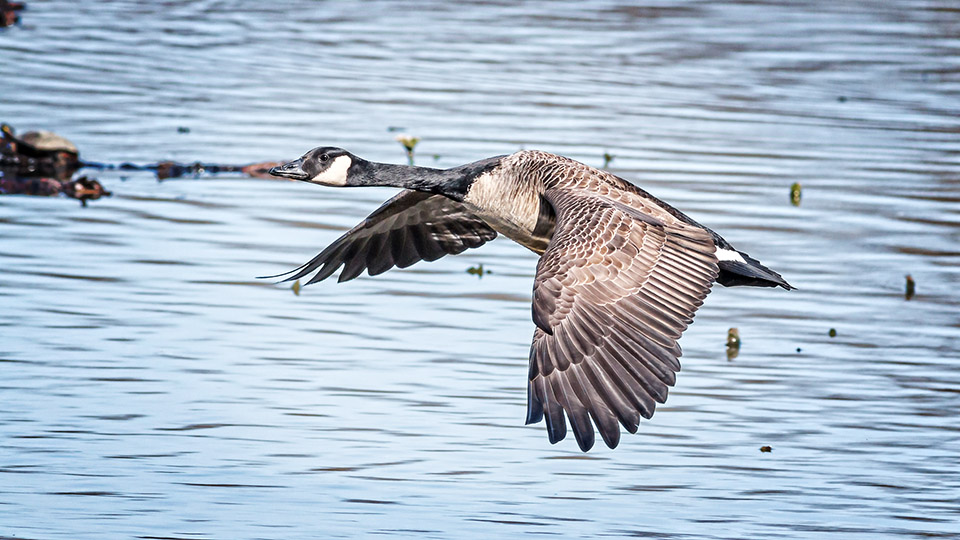
Geese have to run across the water for quite some ways to become airborne. They are not able to spring directly into the air. They also adjust the movement of their wings when they are just above water to a more horizontal motion than the vertical motion of normal flight which is why the wings are stretched out ahead of the bird.


Diagonal lines in a still image are suppose to impart a more dynamic feel. I wonder if that works for you with this picture. I like the river of brown zigzagging through the photo okay, but I'm not sure I come away with any feeling of dynamism.

Wednesday, October 7, 2015

I Believe I can Fly Too


This is the kind of grace a duck naturally has that herons seem to lack for the most part. This would be a nice posture for a wood carving. Here you can see the beautiful color of the speculum on the wing, although it has gone to violet rather than cobalt blue.


When filming flocks of birds, the photographer needs to take care not to release the shutter when one of the birds has it's head hidden behind another bird 's body. It is disconcerting to see a body but no head. It is better to wait for complete separation if possible, but it wasn't going to happen with this grouping.


Mallard ducks do like to talk. They also seem to be the happiest of the ducks. The female is the one with the familiar quack. Males don't quack but have a quieter call. Mallards become flightless during the molt in late summer.

Turtles and Ducks!

Here are three nonbelievers (I Believe I Can Fly?). If you enjoy comedies and have never seen it, you should check out the movie, "Bandits," starring Bruce Willis, Cate Blanchett and Billy Bob Thornton. There is a scene where Thornton is sleeping on a couch, suddenly opens his eyes, and loudly exclaims, "Beavers and ducks." It is the kind of off-the-wall humor found throughout the movie. He could have just as easily said, "Turtles and ducks!"


I don't normally like photos of birds taken from this perspective. Anyone looking up when a bird flies over is going to see the same thing. There is nothing special about it. I still like it though. It is a nice clear image of the under wing pattern which can be important to identifying ducks in flight. Maybe not close up like this, but at a distance it can be useful.

Monday, October 5, 2015

They Didn't Make the Cut 5


If you are like me, it takes a minute to make sense of this image. This is a Canada Goose that is just preparing to roll upside down like the goose photo from yesterday. The black area on the left just above the water is the goose's neck and once you realize that, you can make out the white on it's chin.


Here is a goose experiencing the same slushy problem as the Mallard from a couple days ago. All I can say is, "Brrrrr!"


I almost always shoot with the lens wide open to allow as much light as possible onto the image sensor. That translates into a minimum depth of field. It can be seen in this photo where all but the third bird from the left are (surprisingly) in focus. That means the six that are in focus were flying (like a horse race) pretty much neck and neck. That is a snow-covered hillside in the background while the ducks are out over the iced-over pond and the sunlight.


It is amazing how the iridescent feathers on a duck's head can change depending on the angle of the light. With this Mallard for example, at times, it appeared black; at other times, it appeared to be a beautiful emerald green. When I was first tracking this bird's flight, it's head was green, but by the time it was landing the color had turned to this deep indigo blue. Landings on ice can be tricky.


Here is a fine example of a Northern Pintail pair. They are a very handsome duck species. This photo offers a nice comparison of their tail feathers in which the male's feathers can be seen to extend quite a bit more than the female's. They are suppose to be a common duck, but I don't see that many of them.

Sunday, October 4, 2015

They Didn't Make the Cut 4


I do not normally like noise in a photograph, but I think it adds a certain je ne sais quoi (defined as a quality that eludes description) to this image. The light background which is contrary to the dark backdrop one might expect also adds interest. I'm trying to sell it here. Even if you are not sold, I like it. Then, there are the two Bald Eagles that always perch in those trees. Because of the noise, it lends itself to a drastic solution — which I will demonstrate in another photo below.


Between open water and hard ice was a stretch of slush that was difficult to navigate. I am always amazed at the tolerance to cold of animals such as this Mallard. As humans, we can get into shelter to warm ourselves. They don't have that option. If they suffer hypothermia, it is probably deadly.


I like the Canada Goose's pose a lot. The primary feathers on the wings are all nicely spread out, the feet are hanging down in preparation for landing. Like a hunter that misses his shot, though, I didn't lead the goose enough. He should be over on the left but, instead, he is flying out of the picture. Supposedly, that leads the viewers eye right out of the picture. Do you buy that?


Here is the photograph I was referring to earlier. I like the photo. I like the posture of the birds, the muted, almost monochromatic colors. I don't even mind the evident signs of "civilization" in the background. Only thing is, I missed focus. No amount of sharpening is going to correct the problem. But, you can go in the other direction, making it softer still. Using the same technology to remove noise in a photo, the image can be blurred to the point of looking more like a painting than a photograph. I included the image here to demonstrate one solution.


Until a couple of years ago, I had never seen a goose flip upside down like this to bathe. Now, it seems like I see it quite often. I am not sure how I could have missed it before. If you have never seen them do this, you owe it to yourself to seek some out and watch them for a while. It seems like it is contagious. Once one starts, it is soon joined by others. The one in the background is just beginning the shake routine that precedes a roll.


I decided to post the second version after softening the noise so that you could compare the before and after.


Saturday, October 3, 2015

They Didn't Make the Cut 3


The title could be a reference to these tryouts for an AFLAC commercial. The seagull came to the wrong audition and he knows it. You can see it in his face.


I have finally come to grips with "environmental shots" and the fact that I'm never going to get that 1000mm lens I have on my Christmas list. Yeah, every photographer wants those "in your face" close-ups of the birds, but I finally realized I enjoy actually being able to see the birds in the context of their environment. Maybe it is because I am interested in their behavior as much as the way they look.


Hold it... Hold it... I don't know how they can do this and remain balanced, but they all seem to know the trick. Maybe it is because the water is just above freezing. Those alligator looking thingies are the roots of the water lilies.


An emergency landing in Iceland. I love the blue on blue.


A game of pecking order.


The eyes have it. So was your eye drawn to the one gull in the front? That is what happens every time I look at it. It is like I can't help myself. I go right to that gulls eye.

Thursday, September 24, 2015

Tiny Dancers 2


How fast a hummingbird can flap it's wings depends on the bird's size. Ruby-throated Hummingbirds flap their wings about 55 times a second. That translates into an almost infinite number of possible wing positions, depending on what the bird is doing. With the hundreds (thousands?) of photos I have taken of hummingbirds over the years, I am not sure I ever caught one quite like this one with the right wing looking very much like a parallelogram. That wing with the feather shafts radiating outward is almost the only reason I kept this image.

I probably didn't notice at the time, but the tiny stone I put over the back "flower" on the feeder is visible in this picture. I do that to discourage visitors from hiding behind the bottle. Usually, I position the feeder so the stone is not visible from this camera angle.


Until I started working on this image in post processing, I didn't really think it was anything special, but now that I have finished it, I really like the intimate atmosphere this picture communicates. The ability to isolate one or two blossoms of the Torenia also seems to improve on the look of the flower. It does not look particularly good when you can see "mass quantities" (as Coneheads are prone to describing things) of Torenia blossoms. Speaking of which, How did they get the Conehead's Dan Akroyd and Jane Curtin to look so young in that insurance commercial that came out recently?


Another handsome (it's a male) tiny dancer. Come back next year when you have your ruby gorget and let me take some pictures. Oh, you don't think they return to the same place after traveling all the way to South America for the winter? Well, let me tell you a little story. [Oh, no! Not this one again!] Yeah, some of you may have heard it before, but bear with me for the sake of those who haven't.

I didn't believe the same tiny bird could fly all the way to South America, crossing the Gulf of Mexico twice in the process, and find it's way back to my house either. At one time, at our former home, we had a feeder hung from a piece of heavy fishing line on the side of the garage. After the hummingbirds left for the year, I took the feeder down, but left the string hanging there. The following year, I was a little slow in getting the feeders up and the hummingbirds were already back. When I saw a little hummer fly over to the string and inspect it, I knew it had been there the year before. It was the only way it could have known there was a feeder hanging on that string the year before.


I may still post a few more hummingbird pictures, but this is probably the last one which includes flowers. As a photographic aside, notice how the camera position (it's low elevation in reference to the subject) affects what the picture communicates. To me, part of the communication of this photo is that the hummingbird is supremely confident in sampling a flower right over my head. That is not really true, since I was using a telephoto lens and the bird was not actually over my head, but the impression still remains that the bird is supremely confident — and that almost is entirely due to the angle at which the picture was taken. So, I'm just saying, always consider the camera position in your compositions.

Monday, September 21, 2015

The Molt


Probably the best time of year to find a hummingbird feather is during the molt which occurs in late summer in advance of their migration south.


I didn't consider it when I decided to take pictures late in the season, but I probably should have. The circumstances are very similar to filming flowers. You don't want to wait until they are past peak and start to show signs of decay. In the same way, the less-than-prime look of the bird with worn feathers can be distracting. Here, you can see pin feathers on her chest.


It wasn't too long before the pin feather had lost it's sheath, but now the feather was sticking out and needed to be smoothed down.


The birds seem pretty miserable when they are molting and itch all the time. As small as the birds themselves are, the tiny feathers just behind her bill are incredibly small. I think it is one of those that is falling.


She has pin feathers sticking out all over her head! Look at the tiny ones around her eyes. Before the pin feathers open, they actually have blood flow to them and the bird can lose a significant amount of blood if they are damaged.


She looks like she is wearing a pompadour, doesn't she?


Here is a good example of what I am talking about. The photo is pretty nice in all respects, but those feathers on the crown of her head become a focus of attention and a distraction. I think one thing I resolve to do next year is start a little earlier.