Showing posts with label Bird Species. Show all posts

Saturday, October 31, 2015

Looking Back


The Chesapeake Bay region is within the Rusty Blackbird's winter range. On the Eastern Seaboard it stays along the coast up through southern New England. As the summer progresses, the rusty feathers become worn and the bird turns darker.


The Wilson's Snipe is also a bird that can be seen in this area over winter. They breed throughout Canada and Alaska, so this area is like their Florida in winter.


This is one of the Osprey pair that nests on the platform on the edge of the marsh just outside of town in North Beach. This was just at the beginning of the nesting season, a time of final preparations on the nest.


I'm not sure if this is the male or female. It was early April and the bird looks in excellent health for having finished it's migration a week or two earlier. It is not a tagged bird.


Both the male and female gather material for the nest. That is what this Osprey is doing. They do not land to do this, but fly low over the marsh and snatch grasses and mud for the nest in their talons without stopping. This one gathered a clump of mud and took it to the nest. A little while later both flew, one right after the other, picking up mud like WWII fighter planes in a strafing run.

Friday, October 30, 2015

Five on a Friday


I saw these two crows back in the spring. They appeared to be trying to decide where to site their nest. The crow's nest on a masted ship purportedly got its name because it was so high up like a — er, crow's nest.


This Bald Eagle also had nesting on it's mind as it parachuted down into the marsh to pick up a stick. Perhaps, like Osprey, they add sticks to their aerie throughout the year, because this was already past the time when they would have been nesting.


Can you imagine how long it would take to clean your entire body if you had to use a toothpick? The tips of their bills are pretty much all they have for preening. phttt...


Bald Eagles spook just about any other species of bird. Like these Green-winged Teal, birds feel safer if they are in the air when an Eagle is flying around.


The ones with the mahogany and green heads are the males. The less colorful ones are the females. Eventually, they settle back down when the Eagle becomes a speck on the horizon. Their numbers bottomed out in the early 1960's at about three quarters of a million. Today, there are roughly 3.5 million Green-winged Teal.

Monday, October 26, 2015

A Mix of Species


Northern Shovelers are such graceful birds in flight. I posted another frame from this series back in the spring. I was glad to capture them against the backdrop of a sycamore rather than just sky. They have one of the longer wingspans of ducks. When their young are born, they have a regular duckbill shape. It is only as the mature that the bill becomes "spoonbill" shaped with the tip being almost twice as wide as the base.


This is about as monochrome as it gets out in the wild. These are mostly Lesser Yellowlegs with a couple of Snipe mixed in.


Blue-winged Teal can be very difficult to photograph because they spend so much time with their heads underwater. If they had not been moving from one mud flat to another, I would not have gotten so many with their heads above water. Notice how difficult it would be to identify the females from other similarly mottled females of other species. They do have a telltale patch of blue on their wing, but it is not always visible.


Lesser Yellowlegs eat mostly insects but will occasionally eat small fish if the opportunity arises. I photographed one catching and eating a small fish in the spring. Females will abandon the nest before the young can fly, leaving the male to defend them until they can fend for themselves.


When they are only moving a short distance to another location, they won't tuck their feet, but will let them hang down in readiness to land. Many other species also do this. It is not as aerodynamic as pure flight.


Early on, I was able to photograph some striking images of Snowy Egrets against mud backdrops that appeared almost as if they were painted. It caused the birds to really stand out. The streams that coursed through the mud narrowed the area where minnows could swim, making it easier for them to be caught.

Sunday, October 25, 2015

The Disappearing Act


The colors and patterns on many animals can make it very difficult to spot them in their environment. In addition to camouflage, they also use other techniques to hide. One common method used by many different animals is to simply stand completely still.

In this photo, the two male Wood ducks can be seen fairly easily over on the left. The left arrow points to a third half-hidden male and the arrow on the right is pointing to a Great Blue Heron that you might have overlooked if the arrow wasn't there.


I recall a mother raccoon that brought her two babies up on the deck one year and tried to catch my wife's goldfish out of her little pond. I went out there and the mother took off, but the babies froze in plain sight thinking that if they were simply completely still, they would surely be invisible. Even when I shushed them, they wouldn't move.  This is not the pond; it is the birdbath, where they were politely washing their hands before the main course.


I was painting around the front door yesterday afternoon when a herd of ten or more Whitetail Deer snuck down the ridge on the side of the house. I watched one acting just like a kid. It went from tree to tree hiding most of it's body behind each one and peeking around the side. This photo was taken last year from the same porch where I saw the herd coming from the back of the house. I beat them to the side porch and got real still before they passed. This female spent the longest time standing still and studying me to see if I would move and whether I was a threat.

Friday, October 23, 2015

Four on a Friday


American Ringed-necked ducks are very cool looking with the white markings on their face. I can't figure why they don't call them Ring-billed ducks since the white ring around their bill is much more obvious from a distance than a ring around their neck. The brown one in the middle is the lone female in this bunch. For a supposedly common duck, I don't really see all that many of them. They might be mistaken for the Greater Scaup which has similar markings sans the rings.


Here is another mystery. I don't understand why this swan is so perfectly content to live life alone. You would think it would miss the companionship of others of the same species. There was a Sandhill Crane in this area a few years ago that also spent its days in a solo existence for at least a couple of years. I don't know if it is still in the area or whether it finally went looking for other Sandhills.


Here she (or is it he?) is patrolling her domain. I wonder what her reaction would be if another Mute Swan visited the pond. That would be interesting to see. Her wings are in the raised or "warning" position indicating an aggressive attitude, although I don't remember anything being near her that she might be upset with. Unless it was me. She had passed by me a few minutes earlier.


It is open season on Wood Ducks right now. It wasn't all that long ago that the population was facing extinction of a lack of good nesting sites. They naturally nest in tree cavities found in bottomland hardwood forests. Volunteers got organized and started building and installing nesting boxes and, before you know it, the ducks started coming back. There was probably a population of between twenty-five and fifty at this pond early in the spring. I am not sure where they are finding all the nesting cavities because there isn't one box on this pond that I am aware of.

A mother Woody will encourage her young to leave the nest the day after hatching. That can entail a jump from a hole in a tree fifty feet or more up and a march of up to a mile to get to water. They are precocious, born with their eyes open and the ability to do many things on their own such as swim. This pond is hemmed in a by major highways and a railroad track, so there is a limit to where they can find suitable nesting cavities. They are finding them somewhere close, though, since there were quite a few clutches of chicks on the pond in the spring.

Thursday, October 22, 2015

Orderly Chaos


I am not sure how professional nature photographers can make a living. Take a photograph like this. Except now substitute the seagulls with Whooping Cranes or Sandhill Cranes and the background for Bosque del Apache NWR in New Mexico or some other "exotic" location. What is the difference between the controlled chaos out there or right here near home? My answer is a few thousand dollars for airfare, hotels, rental car and meals. When you get back, you are several thousands dollars in the hole before you even attempt to sell a print.

I personally would just as soon stay close and film these birds. But you say, "They are nothing but stinkin' seagulls!" To which Winnie the Pooh would reply, "Weeds are flowers, too, once you get to know them.." What is it that piques your interest in a photo like this? Is it the species of birds or the chaos? If the answer isn't the former, the photographer has gone to New Mexico for nothing.

Wednesday, October 21, 2015

Islands in the Sun


Birds standing in water, like these Lesser Yellowlegs, remind of little islands. I thought I would have more opportunity to photograph them this summer, but that didn't happen.


Here are three Killdeer on little islands. They always strike me as being very worried birds. It is strange how animals can embody certain qualities.


Sometimes I take a picture that is intended to be an ornament to a photo book — if I ever do one. Like a little postage stamp-sized image at the beginning of a chapter.

A pig in a puddle

Look at this drake! How in the world can he extract anything nutritious out of that mess? Maybe a better question is, How can he extract himself from that mess? He would have to either slog out or fly. Fortunately, Mallards can take off straight up.


The green on Green-winged Teal is not green — it is neon GREEN! I wouldn't be surprised if it was glow-in-the-dark too. Teal are the last ducks to migrate and the first to return. They are already back in this area. The two in back are males.

Thursday, October 15, 2015

A Sense of Loss


It is surprising how many little things add texture to our lives when you think about it. We all have little things that help to make us comfortable or add a measure of  joy to our existence. Or maybe not. For some people it seems, joy in life is being miserable. But, that is another story.

One of the things that always adds a small dab of joy to many of my days is the sight of a pair of wrens and their great example of fidelity. If they aren't within eyesight of each other, they are always at least within shouting distance. And, for a such little bird, they do have a booming voice. They do everything together. If  you see one at the feeder, it was a sure bet to see the other one somewhere close by looking in cracks between deck boards for bugs.

Earlier, in the spring of this year, I posted some photos of the pair coming and going with food for their young. They had constructed a nest in one of the flower baskets we hung this year.

We also have another hanging basket that is left up year round. I had constructed a little "cave" out of one of those semi-disposable plastic storage containers. Sand at the bottom with leaves over that and a little sphagnum moss added. In winter, the pair would come in, usually well before dark, and retire to the cave. It hangs far back on the porch keeping it out of the wind and any rain or snow. Even if we weren't sitting out on the porch for them to fuss at when they came in the evening, I would hear their loud conversation from inside the house and know they were retiring for the evening. It was almost like watching a little processional the way they would retire each evening.

In the last month or so, I had only been seeing one wren — and that only occasionally. When I was filming the hummingbirds, one of the pair had come in and landed on a "prop" near the feeder. The bird was looking pretty disheveled, but I thought it was molting. Maybe it wasn't.

Yesterday, I took everything off the porch to power wash it, including the little hanging basket "cave." That is when I discovered the remains of one of the wrens. It is odd because my wife had experienced the same thing at work where a wren had returned to the last nest where she had raised her young and died there. Perhaps they saw it as a familiar and safe place to spend their last hours. I couldn't help but feel a sense of loss for  a little sprite that has always brought joy to my world just by living out it's life around my house.

Tuesday, October 13, 2015

In Context or Getting Your Ducks in a Row


I found this image with mud on the faces of most of the Canvasbacks and a bonus Redhead in the middle of them for comparison between the two breeds. The second and fourth from the left are females.


I have to wonder if Mute Swans aren't getting a bum rap. They don't chase all birds out of their territory. The only birds I have seen them chase are geese. The swan is unconcerned with all the ducks in this picture and I observed the swan over the summer share a beach with Mallards and a fallen log with herons. Personally, I don't have a problem with them chasing the ubiquitous gooses.


I took this image of the Mute Swan early on in my acquaintance with the breed. I thought the lifted wings were lovely, but didn't realize that is suppose to be a sign of aggression. Her (or his — I'm not sure) head is cocked in curiosity as she eyes me to determine if I am a threat. Had I known this, I might have been a little more concerned for my safety. They are an imposingly large bird that could do some harm.


Ben Carson has been complaining about the news media distorting what he says by reporting his comments taken out of context. And he is right. The liberal media intentionally do that to conservatives It seems to me, a  close-up photo of a bird can be similarly taking the bird out of context. Like I said recently, it has taken me a while to come to grips with the idea that not all of my bird photos are going to be in-your-face close. On the other hand, not many people are willing to show you their not-so-close shots. So, maybe there is a niche there that my images are filling.


It is gratifying to see a bird like the Pileated Woodpecker thriving in an area like this. The Ivory-billed Woodpecker, a close relative, is in all likelihood extinct because it's preferred habitat was so specialized. This bird lives in an area with a heavily travelled highway close by and commercial businesses which include equipment that can be very loud. Not ideal, but it is nice to see him making it none the less.

Monday, October 12, 2015

Find an Excuse to Be Outdoors


I don't chase small birds. They are too difficult (in my opinion) to get near for good photos, they can disappear at the drop of a hat, and they rarely land where there is a decent background to set them in. With the birds I film, I stay in one place and they come to me.


That was the difference with this little Yellow-rumped Warbler — the bird came to me. They are surprisingly common in this area in the winter months. I think I have probably seen more of them than any other warbler. They have a unique digestive system which allows them, unlike most other warblers, to eat berries, so they are able to winter further north than most other warbler species.

While I am thinking about it, I use the term "film" in a generic sense for the act of photographing. It is no longer an accurate expression — even for movies —  because most of those are also digital. But, like the substitution of the word Kleenex for tissue, it is useful to easily express the activity of creating images.


The American Coot is a strange bird. It is not a duck. It doesn't have webbed feet like ducks, but rather has strange, lobed feet. They are also known as mud hens. They are also fairly long-lived birds, which might be why someone like myself is called an "old coot." They also build floating nests. Is that enough strangeness for you?


If I told you where I captured this image, that is, where I "filmed" it, it would probably lose some of it's mystique. Okay, I'll tell you anyway. It was behind Home Depot where I had parked to access what has come to be known as the "Depot" pond. The same pond where the welcoming committee consists of a Mute Swan with a nasty temperament. The one on the left is saying, "You're not gonna tell that swan we're here, are ya?"

Okay, so, getting around to the title of this little soirĂ©e into the bird kingdom — Find an Excuse to Be Outdoors. Think of being outdoors as a problem expressed as: "I don't get outdoors enough." As with any problem, you can't fight something with nothing. If you don't have some reason to go outdoors, you simply won't venture out.

At one time, my wife and I had a boat and liked to fish. These were two good reasons to be outside. Both activities just work better outside. I could probably regale you for hours with the things we saw and did pursuing these two activities. The point is, though, those two pursuits enriched our lives beyond words, revealing things about our world and each other that we would have never experienced otherwise. Those two hobbies aligned with our personal interests. Your interests may be totally different, but unless they only involve electronics, I will bet you can pursue them in the great outdoors.


These are Canvasback ducks. They might easily be confused with another duck: the Redhead. Their head is more of a mahogany red rather than the red-red of a Redhead, however, and the elongated bill sets them apart from the other. Look carefully and you will see that the two ducks in the middle have mud they picked up from the bottom of the pond up past their eyeballs!

A couple of environmental issues affect their numbers. One is the presence of submerged aquatic vegetation (SAV). Their favorite grasses have ebbed and flowed in the Chesapeake Bay, largely due to weather systems that cause too much silt to be introduced into the main stem from the rivers that feed it. The silt smothers and decreases the sunlight in shallow waters causing the grasses to die off. No grass; no Canvasbacks.

The other problem is lead shot used in hunting. When they have their heads in the mud, they are also ingesting lead from spent shot, which poisons them and leads to their demise. Solutions are available in the use of other types of shot but, if you are a hunter, it as a moral issue having to do with poisoning the landscape and the animals which cannot make a choice about how or where to eat healthy. We are the gatekeepers; it is up to us to remedy this problem. Eagle numbers crashed because of DDT. Many more Eagles these days are dying because of lead shot. So are a host of other species. 'Nuff said.

Thursday, October 8, 2015

Ground Control to Major Tom (with apologies to David Bowie)


Much like Geese, Mallards enjoy talking even while they are flying. I'm pretty sure this one was talking. This is not as bad as many, but gives some idea of why I said yesterday that I don't like to film them head-on. Their bodies look too fat and their heads look proportionately too small.


Side views are much better. The dark parallelograms on their wings are actually a beautiful cobalt blue in most light conditions. Although the females are mottled and not as colorful as the males, both sexes share the blue speculum bordered in white.


Three males; three females. Everybody brought a partner to the dance. I like the little "snowball" bumps in some of these images which are out-of-focus seagulls. This image was taken at Schoolhouse pond where there is a boardwalk around the edges of the pond. The snow has an amazing softbox affect and I can't wait to use this to advantage again this winter. Provided we get snow. In small doses.


I think I was worried readers were getting bored with photos of Mallards and Canada Geese and so I moved on to other subjects. Otherwise, I think I would have included this beautifully detailed image of a goose. God's creative artistry is so evident in the feather detail.


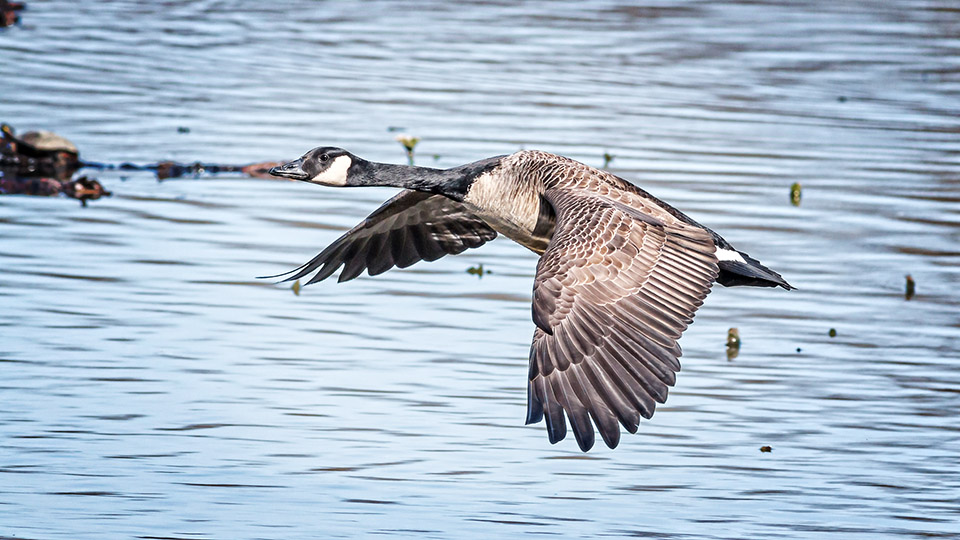
Geese have to run across the water for quite some ways to become airborne. They are not able to spring directly into the air. They also adjust the movement of their wings when they are just above water to a more horizontal motion than the vertical motion of normal flight which is why the wings are stretched out ahead of the bird.


Diagonal lines in a still image are suppose to impart a more dynamic feel. I wonder if that works for you with this picture. I like the river of brown zigzagging through the photo okay, but I'm not sure I come away with any feeling of dynamism.

Wednesday, October 7, 2015

I Believe I can Fly Too


This is the kind of grace a duck naturally has that herons seem to lack for the most part. This would be a nice posture for a wood carving. Here you can see the beautiful color of the speculum on the wing, although it has gone to violet rather than cobalt blue.


When filming flocks of birds, the photographer needs to take care not to release the shutter when one of the birds has it's head hidden behind another bird 's body. It is disconcerting to see a body but no head. It is better to wait for complete separation if possible, but it wasn't going to happen with this grouping.


Mallard ducks do like to talk. They also seem to be the happiest of the ducks. The female is the one with the familiar quack. Males don't quack but have a quieter call. Mallards become flightless during the molt in late summer.

Turtles and Ducks!

Here are three nonbelievers (I Believe I Can Fly?). If you enjoy comedies and have never seen it, you should check out the movie, "Bandits," starring Bruce Willis, Cate Blanchett and Billy Bob Thornton. There is a scene where Thornton is sleeping on a couch, suddenly opens his eyes, and loudly exclaims, "Beavers and ducks." It is the kind of off-the-wall humor found throughout the movie. He could have just as easily said, "Turtles and ducks!"


I don't normally like photos of birds taken from this perspective. Anyone looking up when a bird flies over is going to see the same thing. There is nothing special about it. I still like it though. It is a nice clear image of the under wing pattern which can be important to identifying ducks in flight. Maybe not close up like this, but at a distance it can be useful.